
This article is not a step-by-step guide. It is an informative analysis to help you understand your options before choosing a model. For official setup instructions, refer to Janitor AI’s documentation
Janitor AI is a character-rich roleplay tool. You can connect it with different AI models. The model you choose decides the quality of your experience. These models are the driving force behind Janitor’s ability to chat, roleplay, and create stories.
Models
- LLaMA 2 (Free) • Mistral 7B (Free) • Falcon 40B (Free) • GPT-J 6B (Free) • GPT-4 / GPT-4o (Paid) • Claude 2 (Paid)
In this blog, we will tell you about the features of the 6 best models that work with Janitor AI, so that you can pick the right one.
Why Janitor AI Needs Models
- Janitor AI is just an interface. It does not generate text by itself.
- It connects with models like LLaMA, GPT, or Falcon.
- The model does the “thinking.” Janitor AI gives you characters, memory, and roleplay tools.
- All the characters are created by these models.
1. LLaMA 2 (Free)
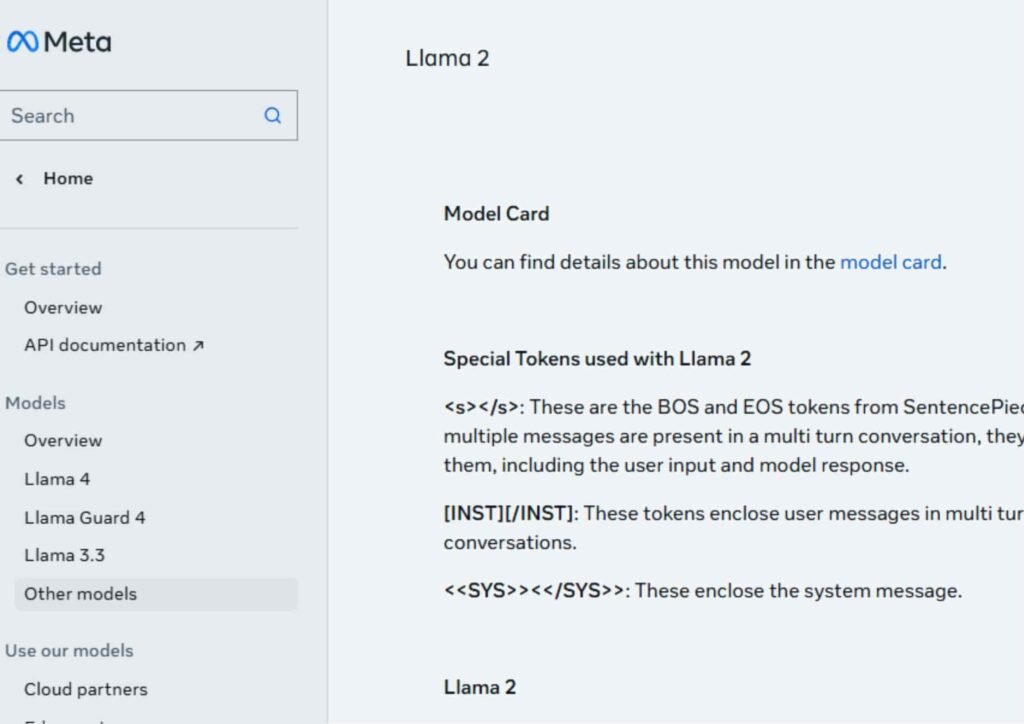
LLaMA 2 is an open-source large language model released by Meta (Facebook) in July 2023, available in 7B, 13B, and 70B parameter sizes. It was one of the first commercially-licensed open models to rival proprietary systems, making it a landmark release for the open-source AI community.
Key Features
- Made by Meta (Facebook) — open-source and free.
- Comes in sizes: 7B, 13B, and 70B parameters.
- Strong at roleplay and storytelling.
- Can run on local PCs with a GPU or on Google Colab.
- Works with Janitor AI through KoboldAI or API.
- Makes Janitor’s responses more realistic and coherent.
Flow Diagram
- Janitor AI (User Interface) + Kobold AI (Middleware) + LLaMA 2 (Brain).
Function Of Kobold AI With Janitor AI
- Kobold AI provides extra features to janitor AI, like storytelling and story writing. It also acts as a Middleware or bridge that connects the Janitor with a backend Model like LLaMA 2.
Use Cases — LLaMA 2
| Use Case | Why It Works |
| Long-Form Roleplay | The 13B and 70B variants maintain context across extended sessions, ideal for ongoing character-driven stories with rich world-building. |
| Local / Private AI Setup | Runs fully offline on a consumer GPU. Suitable for users who want privacy and don’t want to rely on cloud-based APIs. |
| Custom Fine-Tuning | Open weights allow fine-tuning for specific genres (fantasy, sci-fi, historical fiction) or writing styles, unlike closed API models. |
| Educational & Research Use | Researchers and developers use LLaMA 2 to study model behavior, alignment techniques, and domain-specific NLP tasks. |
| Budget-Friendly Storytelling | Free to use with no API costs. Users can run sustained roleplay sessions without incurring per-token charges. |
Best For: Free users who want realistic chats and long roleplays.
User Reviews
Community users frequently praise LLaMA 2’s open-source flexibility and the ability to fine-tune it for specific roleplay styles. Many users report that the 13B and 70B variants produce noticeably richer storytelling compared to the 7B version. Some common criticisms include higher hardware demands for the larger variants and occasional repetition in very long roleplay sessions.
2. Mistral 7B (Free)
Mistral 7B is an open-source language model released by Mistral AI (a French AI startup) in September 2023, designed to outperform larger models at a fraction of the compute cost. It uses grouped-query attention and sliding window attention to achieve fast, efficient inference at just 7 billion parameters
Key Features
-
- Open-source model made by Mistral AI — small but powerful.
- Free to use. Fast and lightweight — operates with 7 billion parameters.
Hardware Requirement
- Mid-range GPU or cloud service.
Flow Diagram
- Janitor AI (User Interface) + Kobold AI (Middleware) + Mistral 7B (Brain).
Use Cases — Mistral 7B
| Use Case | Why It Works |
| Real-Time Roleplay Chat | Fast inference speed makes Mistral 7B ideal for quick back-and-forth dialogue where low response latency matters. |
| Prototyping & Testing | Developers and creators use it to test prompt designs and character setups quickly before moving to heavier models. |
| Low-Hardware Environments | Runs well on mid-range GPUs (e.g., RTX 3060). Best option for users without access to high-VRAM enterprise hardware. |
| Casual & Episodic Sessions | Well-suited for shorter, self-contained roleplay sessions where deep long-term memory is less critical. |
| Cost-Free API Alternatives | Available via OpenRouter and similar platforms at very low or zero cost, making it a strong alternative to paid APIs. |
Best For: Fast replies and low hardware cost.
User Reviews
Mistral 7B scores 4.2 out of 5 on G2 from verified users. Reviewers consistently highlight its fast response time and surprising capability given its compact size. Users in enterprise settings praise it for real-time applications and prototyping. A common drawback noted is that it occasionally lacks depth in complex reasoning or nuanced emotional conversations compared to larger models.
3. Falcon 40B (Free)
Falcon 40B is a 40-billion-parameter open-source model developed by the Technology Innovation Institute (TII) in Abu Dhabi, UAE, and released in 2023 under an Apache 2.0 license for commercial use. At release, it ranked at the top of the Hugging Face Open LLM Leaderboard, making it one of the most capable openly available models of its generation.
Key Features
-
- Developed by the Technology Innovation Institute (TII) — completely open-source.
- 40 billion parameters — one of the larger free models available.
- Slower than smaller models like Mistral 7B, but produces more detailed answers.
- Requires a capable PC or cloud server.
What the size means in practice
The 40B parameters allow Falcon to:
- Understand complex writing styles.
- Keep track of longer conversations.
- Produce well-structured and detailed responses.
Because of this, it is popular for:
- Creative writing
- Branching stories
- Roleplay
Hardware Requirements
-
Component Requirement GPU 40GB VRAM (NVIDIA A100) RAM 64GB Storage 200–250GB Recommendation Prefer cloud platforms if your PC cannot handle it.
Flow Diagram
- Janitor AI (User Interface) + Kobold AI (Middleware) + Falcon 40B (Brain).
Use Cases — Falcon 40B
| Use Case | Why It Works |
| Detailed Creative Writing | The 40B parameter count enables nuanced, structured prose — well-suited for long narrative arcs, character backstories, and multi-scene story worlds. |
| Branching Story Scenarios | Strong context retention makes it effective for complex, decision-tree roleplay in which choices have lasting consequences throughout the story. |
| Cloud-Based Deployment | Best deployed on cloud GPU platforms (AWS, RunPod, Lambda Labs). Teams building roleplay applications can host it at scale without local hardware. |
| Dialogue Coherence Testing | Developers comparing open-source models often use Falcon 40B to benchmark dialogue consistency against LLaMA 2 70B. |
| Research & NLP Benchmarking | Widely used in academic and research settings to study large-scale open-source model behavior, alignment, and safety at high parameter counts. |
Best For: Users who want depth in roleplay and are okay with slower responses in exchange for richer conversations.
User Reviews
Developers and power users who have run Falcon 40B in cloud environments report strong output quality and well-structured responses for long-form roleplay and creative fiction. The main recurring concern is cost and hardware complexity. Users who have compared it against LLaMA 2 70B note similar output quality, with Falcon sometimes performing better at dialogue coherence.
4. GPT-J 6B (Free)
GPT-J 6B is a 6-billion-parameter open-source transformer model released by EleutherAI in June 2021, trained on the Pile dataset and designed as an open alternative to OpenAI’s GPT-3. It was one of the first large open-source language models capable of coherent text generation, establishing EleutherAI as a key player in open AI research.
Key Features
-
- Older model but still useful — open-source and free.
- 6B parameters. Lightweight compared to Falcon 40B.
- Can run on consumer GPUs.
- Supports basic roleplay and story prompts.
Hardware Requirement
| Component | Requirement |
| GPU / VRAM | 11–12 GB |
| System RAM | 32 GB |
| Storage | 25 GB free disk space |
Trick For Low VRAm (4-5 GB)
Tip: GPT-J 6B requires 12 GB VRAM to run smoothly. If you only have 4–5 GB VRAM, community tools (such as 4-bit quantization via GPTQ or llama.cpp) allow you to run it, but performance will be slower.
Flow Diagram
- Janitor AI ( User Interface) + Kobold AI (Middleware) + GPT-J 6B( Brain)
GPT-6B And Falcon 40B Comparison
| Feature | GPT-6B (lightweight) | Falcon-40B (heavyweight) |
| 1. Parameters | 6 billion | 40 billion |
| 2.VRAM(FP16) | 12-14 GB | 80 GB |
| 3.VRAM(4 bit quant) | 8 GB | 48-60 GB |
| 4.Model size(disk) | 12-15 GB | 90-100 GB |
| 5. Speed | Fast on user GPUs | Slow without server GPUs |
| 6. Hardware needed | Mid-range GPU (RTX 3060/3070) | Multi GPU setup or enterprise GPU(A100, H100) |
| 7. Output quality | Basic, good for casual chat and roleplay | High, strong reasoning and coherence |
Use Cases — GPT-J 6B
| Use Case | Why It Works |
| Beginner AI Roleplay | A popular entry point for new users exploring self-hosted AI roleplay. Low hardware requirements reduce the barrier to getting started. |
| Casual Short Sessions | Good for light, episodic roleplay conversations that don’t require maintaining context over many turns. |
| Hardware-Constrained Setups | Runs on mid-range consumer GPUs (RTX 3060/3070), making it accessible for users who cannot afford enterprise GPU costs. |
| Local Privacy-First Use | Fully offline deployment means no data leaves the user’s machine — suitable for users with privacy concerns about cloud services. |
| Quantization Experiments | A common baseline model for experimenting with 4-bit quantization (GPTQ, llama.cpp) on low-VRAM hardware setups. |
Best For: Budget users who want a free, locally runnable model for light roleplay.
User Reviews
GPT-J 6B is widely regarded as a beginner-friendly entry point into self-hosted AI roleplay. Users appreciate how accessible it is on mid-range hardware. However, most experienced roleplay users note that it has been largely superseded by newer models like Mistral 7B, which offers better output quality at the same parameter scale. Common feedback: good for short, casual sessions, but tends to lose context in longer stories.
5. GPT-4 (Paid)
Editor Note: The article originally listed only GPT-4. OpenAI’s current flagship API models are GPT-4o and GPT-4 Turbo. The original GPT-4 is still available via API but is largely superseded. Heading and content updated to reflect this. Pricing corrected: GPT-4 Turbo is $0.01 input / $0.03 output per 1,000 tokens; GPT-4o is $0.0025 input / $0.01 output per 1,000 tokens.
GPT-4 is OpenAI’s fourth-generation multimodal large language model, launched in March 2023, known for significantly outperforming GPT-3.5 on complex reasoning, coding, and language benchmarks. GPT-4o (“omni”), released in May 2024, is an optimized variant that processes text, images, and audio natively while delivering faster responses and lower API costs.
- Built by OpenAI — very powerful and accurate.
- Runs on server-grade hardware in OpenAI’s cloud.
- Delivers high accuracy, reasoning, and coherence.
- Handles roleplay, reasoning, and long context.
- Works with Janitor AI via API connection.
- Best text generation quality among widely available commercial models.
- Used to solve advanced and complex tasks.
Hardware Requirement
- Cloud-Only: No local VRAM or GPU required. All heavy processing is done in OpenAI’s cloud. Runs on any PC, laptop, tablet, or phone. The only requirement is a stable internet connection.
Flow Diagram
- Janitor AI ( User Interface) + Kobold AI (Middleware) + GPT-4( Brain).
Pricing
| Model | Input (per 1K tokens) | Output (per 1K tokens) |
| GPT-4 Turbo | $0.010 | $0.030 |
| GPT-4o | $0.0025 | $0.010 |
Note: Prices as of 2025–2026. Always check openai.com/api/pricing for the latest rates.
Use Cases — GPT-4 / GPT-4o
| Use Case | Why It Works |
| Premium Immersive Roleplay | GPT-4o delivers highly coherent, expressive, and emotionally nuanced character responses, ideal for users seeking cinematic-quality storytelling. |
| Complex Multi-Turn Narratives | Long context window (128K tokens for GPT-4 Turbo) allows extended roleplay sessions with consistent character memory and plot continuity. |
| No-Hardware Setup | Accessed entirely via OpenAI’s cloud API. No GPU or local hardware required — runs from any internet-connected device. |
| Advanced Reasoning in Stories | Excels at logic-based narrative puzzles, mystery scenarios, and morally complex character interactions requiring deep reasoning. |
| Multimodal Input (GPT-4o) | GPT-4o can process image inputs — useful for users who want to describe character art or scene images as part of their roleplay setup. |
Best For: Users who want premium, natural, human-like chats and are comfortable paying per API usage.
User Reviews
GPT-4 and GPT-4o are consistently rated as the gold standard for output quality among commercially available models. Janitor AI users report that GPT-4o in particular provides fast, coherent, and expressive roleplay. The main drawback cited by the community is OpenAI’s strict content usage policies, which can result in refusals for NSFW or dark-themed roleplay scenarios.
6. Claude 2 (Paid)
The article lists Claude 2 as the current Anthropic model. As of 2025–2026, Anthropic has released Claude 3 (Haiku, Sonnet, Opus), Claude 3.5, and the Claude 4 family. Claude 2 is a legacy model. For new users connecting Janitor AI via API, Anthropic now recommends the Claude 3 or Claude 4 series. The original Claude 2 information is kept intact since the article’s focus is on historical model options.
Claude 2 is a large language model developed by Anthropic and released in July 2023, built with a focus on safety, long context handling, and reduced harmful outputs using Anthropic’s Constitutional AI training method. It supports a 100,000-token context window — one of the largest available at the time of release — making it particularly strong for tasks requiring processing of lengthy documents.
Key Features
-
- Made by Anthropic — paid API access.
- Known for long context handling and safer conversation defaults.
- Can store and process long documents without splitting them.
- Handles up to 100K tokens in one session (approximately 75,000 words).
- Strong in roleplay with memory support.
- Easy integration with Janitor AI via API.
Hardware Requirements
- Cloud-Only: Requires powerful cloud GPUs (NVIDIA A100/H100) on Anthropic’s servers. Uses a very large RAM (hundreds of GB) server-side. Has approximately 70–100 billion parameters (exact number not public). Cannot run on a normal PC — only accessible via Anthropic’s API.
Flow Diagram
- Janitor AI ( User Interface) + Kobold AI (Middleware) + Claude 2( Brain)
Pricing
| Model | Input (per 1K tokens) | Output (per 1K tokens) |
| Claude 2 (Legacy) | $0.008 | $0.024 |
| Claude Haiku 4.5 (Current) | $0.001 | $0.005 |
| Claude Sonnet 4.6 (Current) | $0.003 | $0.015 |
Note: Prices as of 2025–2026. Always verify at anthropic.com/pricing.
Use Cases — Claude 2
| Use Case | Why It Works |
| Long-Form Memory Roleplay | The 100K token context window allows Claude 2 to hold entire story histories in memory — ideal for weeks-long, emotionally evolving roleplay campaigns. |
| Document-Integrated Storytelling | Users can feed Claude 2 lengthy lore documents, character bibles, or world-building notes and have it generate consistent narratives based on that reference material. |
| Emotionally Nuanced Characters | Claude’s Constitutional AI training produces characters with subtle emotional depth and consistent personality traits across long conversations. |
| Safe & Sensitive Narrative Themes | Built-in safety defaults make it well-suited for users who want mature storytelling without extreme or harmful content outputs. |
| API Integration for Developers | Clean, reliable API integration makes Claude 2 (and its successors) a solid backend choice for developers building roleplay platforms or chatbot applications on top of Janitor AI. |
Best For: Long and detailed roleplays where conversation memory and document handling are important.
User Reviews
Claude models are frequently cited in Janitor AI community guides as excellent for “slow burn” and emotionally nuanced roleplay, thanks to their large context windows and ability to maintain character consistency across long sessions. Claude 3 Opus, in particular, has gained a strong reputation among advanced users for its nuanced understanding of emotional subtext. A frequently mentioned downside is Anthropic’s safety filters, which can limit some mature-themed scenarios.
How to Choose the Right Model
| Your Priority | Recommended Models |
| Low budget / free options | LLaMA 2, Mistral 7B, Falcon 40B, GPT-J 6B |
| Highest output quality | GPT-4o, Claude 3 / Claude 4 Sonnet or Opus |
| No local hardware needed | GPT-4o (OpenAI API), Claude (Anthropic API) |
| Fast processing, low cost | Mistral 7B, GPT-4o (via OpenRouter) |
| Long context / memory-heavy roleplay | Claude 2 / Claude 3+ (100K–1M token context) |
Final Thoughts
Janitor AI gives you fun chats, roleplays, and stories. But the model you connect to decides the output quality. Free models like LLaMA 2 and Mistral 7B are great if you want to save money or run things locally. Paid models like GPT-4o and Claude 3/4 give the best results for complex, long-form, or emotionally rich roleplay.
The best choice depends on your budget, hardware, and the type of roleplay experience you want.
FAQ’s
What model do Reddit users recommend for Janitor AI?
Reddit users frequently recommend GPT-4 for serious roleplay and storytelling. For beginners, many suggest starting with cheaper or free models before upgrading to paid options.
Does using a better model improve Janitor AI responses?
Yes, Higher-quality models improve character consistency, emotional realism, and response length.
Are open-source models good for Janitor AI?
Open-source models can work with Janitor AI and are popular; they offer more freedom and lower costs, but may require technical setup and also lack the conversational quality of premium models.




Your mode of explaining everything in this article is
truly fastidious, every one be able to effortlessly understand
it, Thanks a lot.
Having read this I thought it was rather informative. I appreciate you taking the time and effort to put this article together. I once again find myself spending way too much time both reading and posting comments. But so what, it was still worthwhile!